3 hr
Chinatown Culinary Walking Tour
- Expert local guide
- Small group
- Skip-the-line access
- Free cancellation
Walking Tour San Francisco Chinatown — Guided Culinary & Cultural Experiences
Through temple incense and fortune-cookie lanes, where Golden Gate heritage meets Grant Avenue gold.
Compare fares, pick the fit — all bookings are mobile-voucher and eligible for free cancellation where shown.
3 hr
4 hr
2 hr 30 min
Exploring the historic streets with a walking tour san francisco chinatown provides a deep dive into the neighborhood's unique culture and architecture. Visitors can choose between structured guided experiences or an independent exploration of this vibrant district.
| Self-Guided Tour Flexible Access |
Top pick Guided Historical Tour Expert-Led Access |
|
|---|---|---|
| Access Method | Independent exploration | Professional docent-led walking tour |
| Included Areas | Public streets and alleys | Neighborhood and cultural landmarks |
| Best Arrival Window | 10:00–16:00 | 10:00–16:00 |
| Pricing | 0 USD | Variable tour fees |
| Best for | Budget-minded travelers | First-timers seeking history |
| See tickets & prices |
Verdict: For the best experience on your walking tour san francisco chinatown tickets, we recommend the Guided Historical Tour to uncover local narratives.
Worth it for food lovers and culture seekers
A walking tour san francisco chinatown delivers genuine value for first-time visitors and anyone wanting guided access to the neighborhood's layered culture. The area is free to explore independently, but paid tours—ranging from culinary-focused walks to combined Chinatown and North Beach itineraries—unlock temple interiors, family-run dim sum kitchens, and historical context you'd miss on your own. Grant Avenue runs through the heart of the district, lined with herbal shops, fortune cookie factories, and Portsmouth Square where locals gather for mahjong. Tours typically last two to three hours and include tastings at traditional bakeries and tea houses. The real payoff is narrative depth: guides explain the 1906 earthquake's impact, the role of Chinese immigrants in building San Francisco, and how to read storefront symbolism. Skip if you're pressed for time or prefer unstructured wandering—the neighborhood rewards self-guided exploration too. Book for midday or late afternoon when shops are active and temple courtyards are accessible.
Bottom line: Walking tour san francisco chinatown tours turn a photogenic neighborhood into a lived story—worth the guided investment if you want more than surface-level sightseeing.
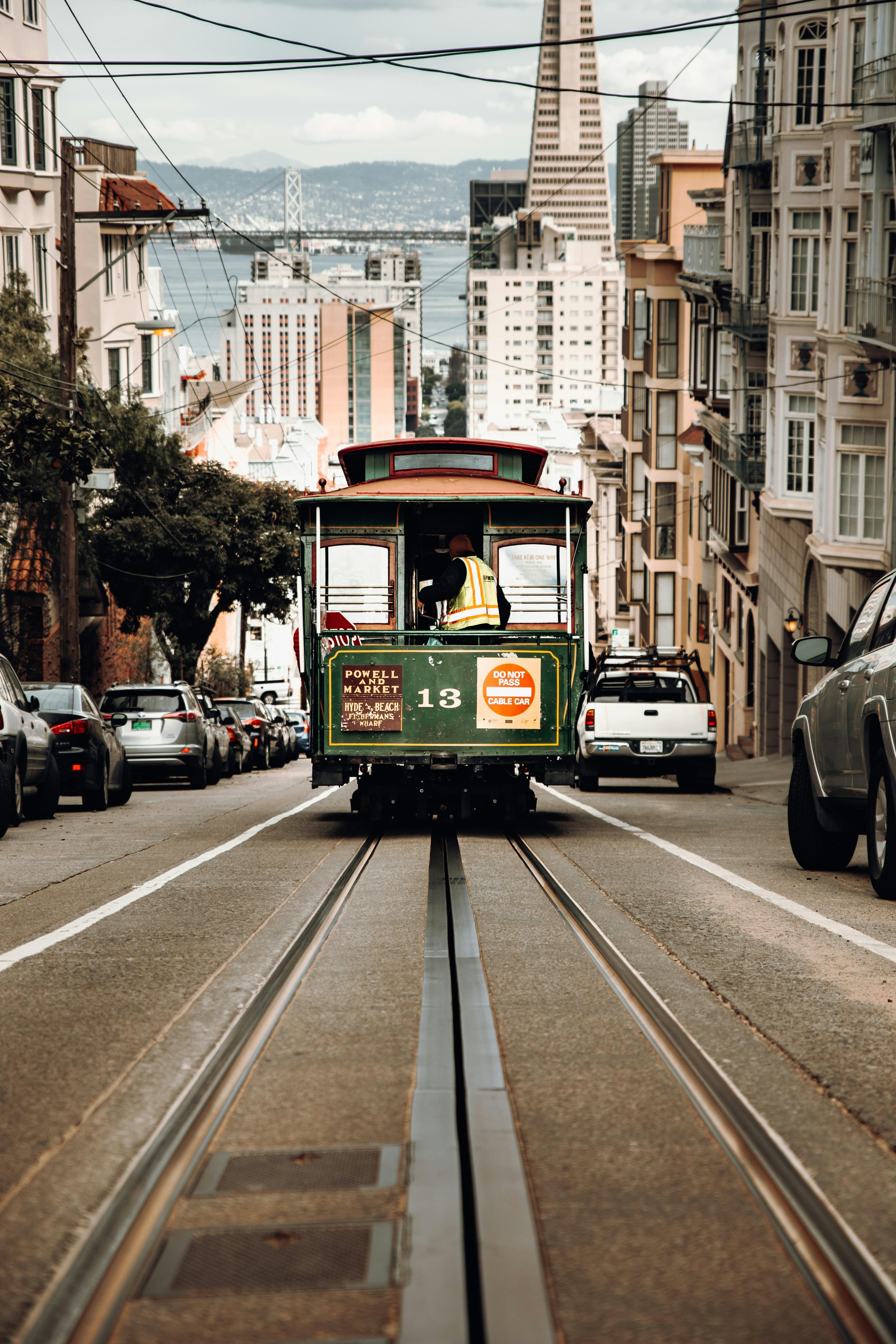
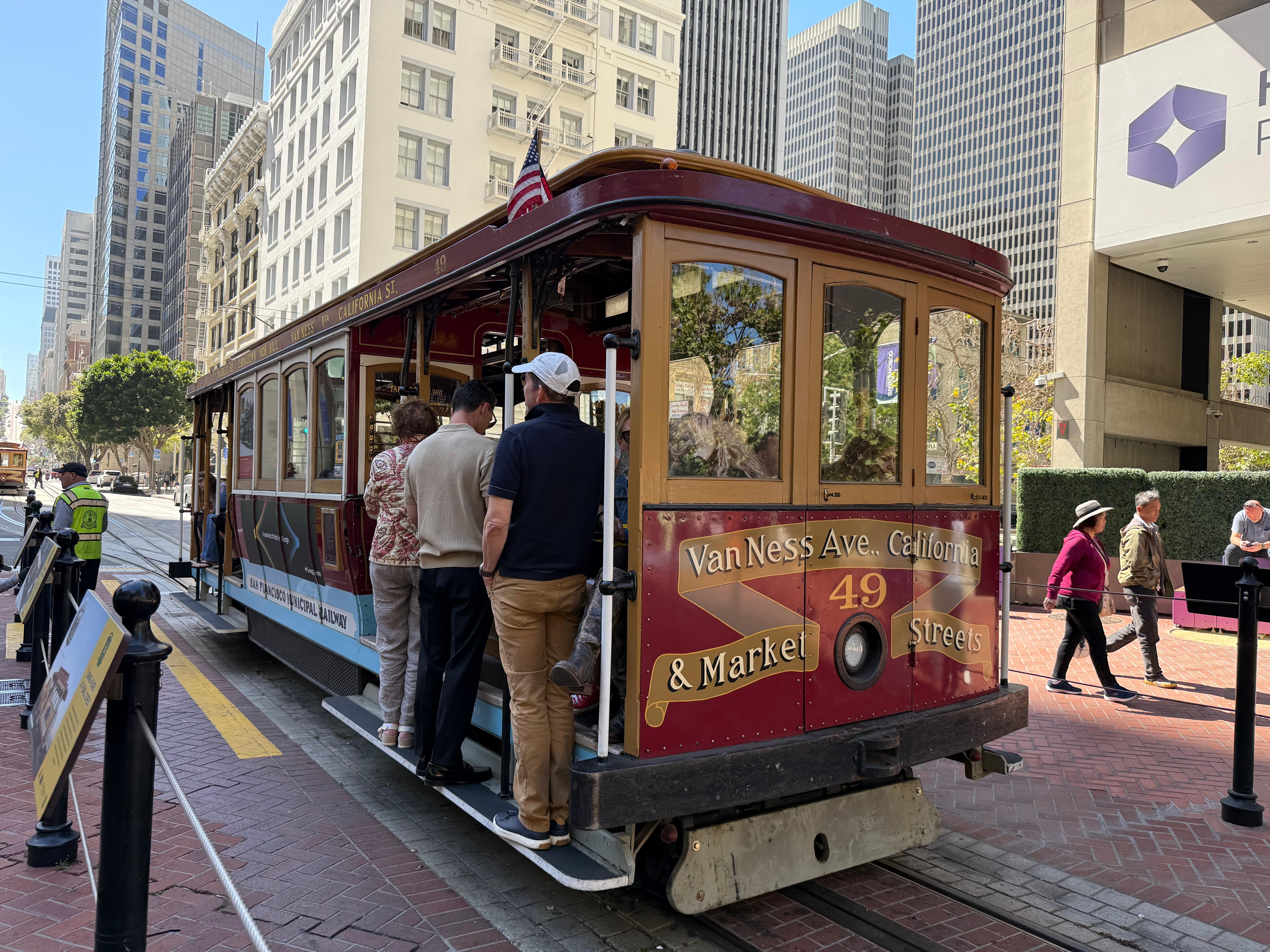
They complement each other; most visitors who do both call the guided walking tour san francisco chinatown tours more culturally immersive, while a cable car ride provides a classic perspective on the city's topography.
|
Top pick Chinatown Walking Tour |
Cable Car Ride | |
|---|---|---|
| Focus | Cultural heritage and neighborhood history | |
| Duration | 1.5–3 hours | |
| Price | Independent fees (approx. 20–40 USD) | |
| Intensity | Moderate walking (includes hills) | |
| Best for | History buffs and foodies | |
| Booking | Recommended for guided access | |
| See tickets & prices |
Verdict: Choose a walking tour san francisco chinatown tour if you want to uncover hidden alleys and stories, but opt for cable car tickets if you prioritize a quintessential San Francisco transit experience.
Hand-picked experiences loved by thousands of travelers
3 hours
Free Cancellation
Explore SF's most vibrant neighborhoods, hidden redwood groves, and taste fresh fortune cookies on this 3-hour guided walk
3 hours
Free Cancellation
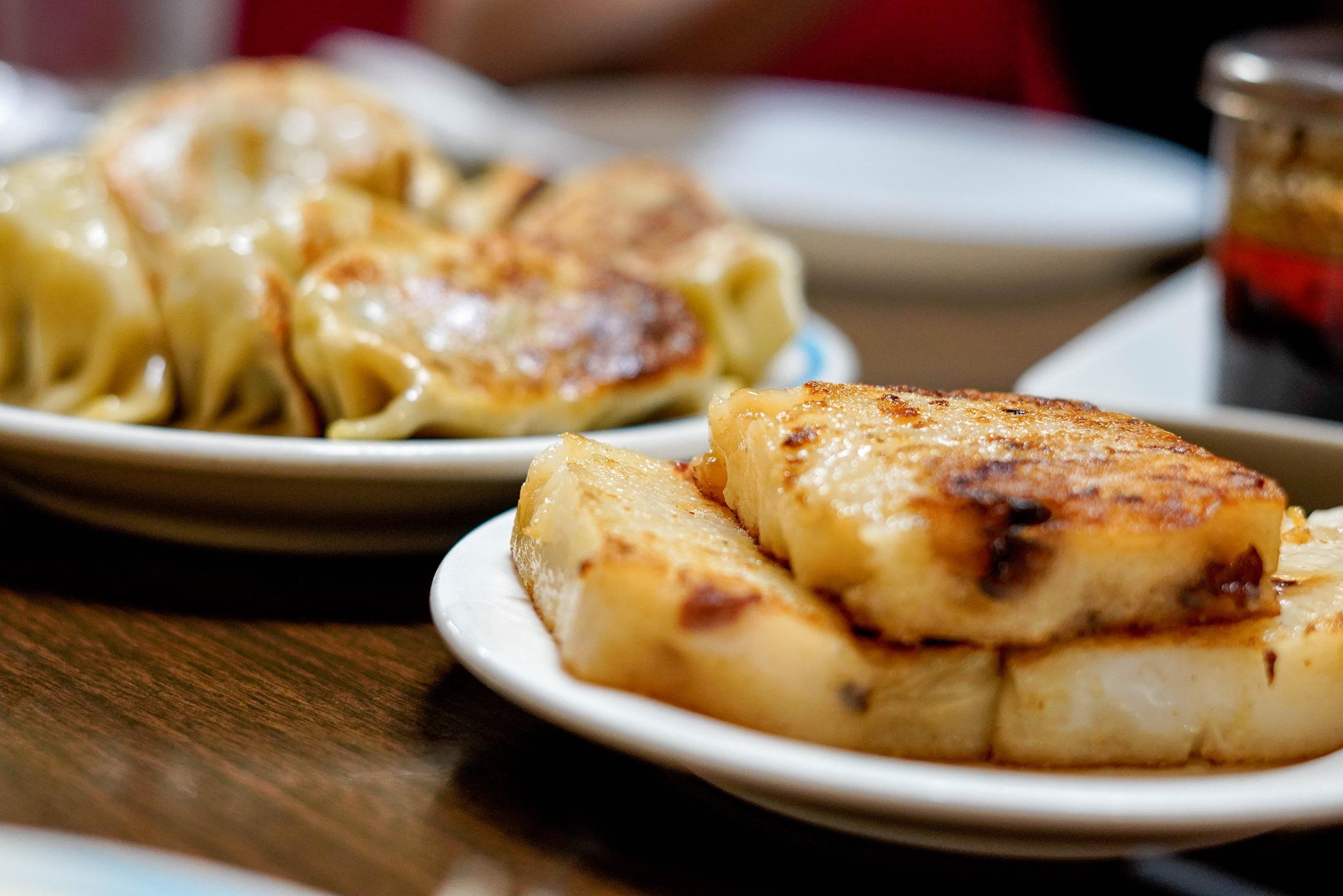
Three-hour tasting journey through San Francisco's historic Chinatown with dim sum, tea, and hidden stories
2 hours
Free Cancellation
Explore San Francisco's historic Chinatown with an expert guide on this immersive 2-hour cultural journey
2 hours
Free Cancellation
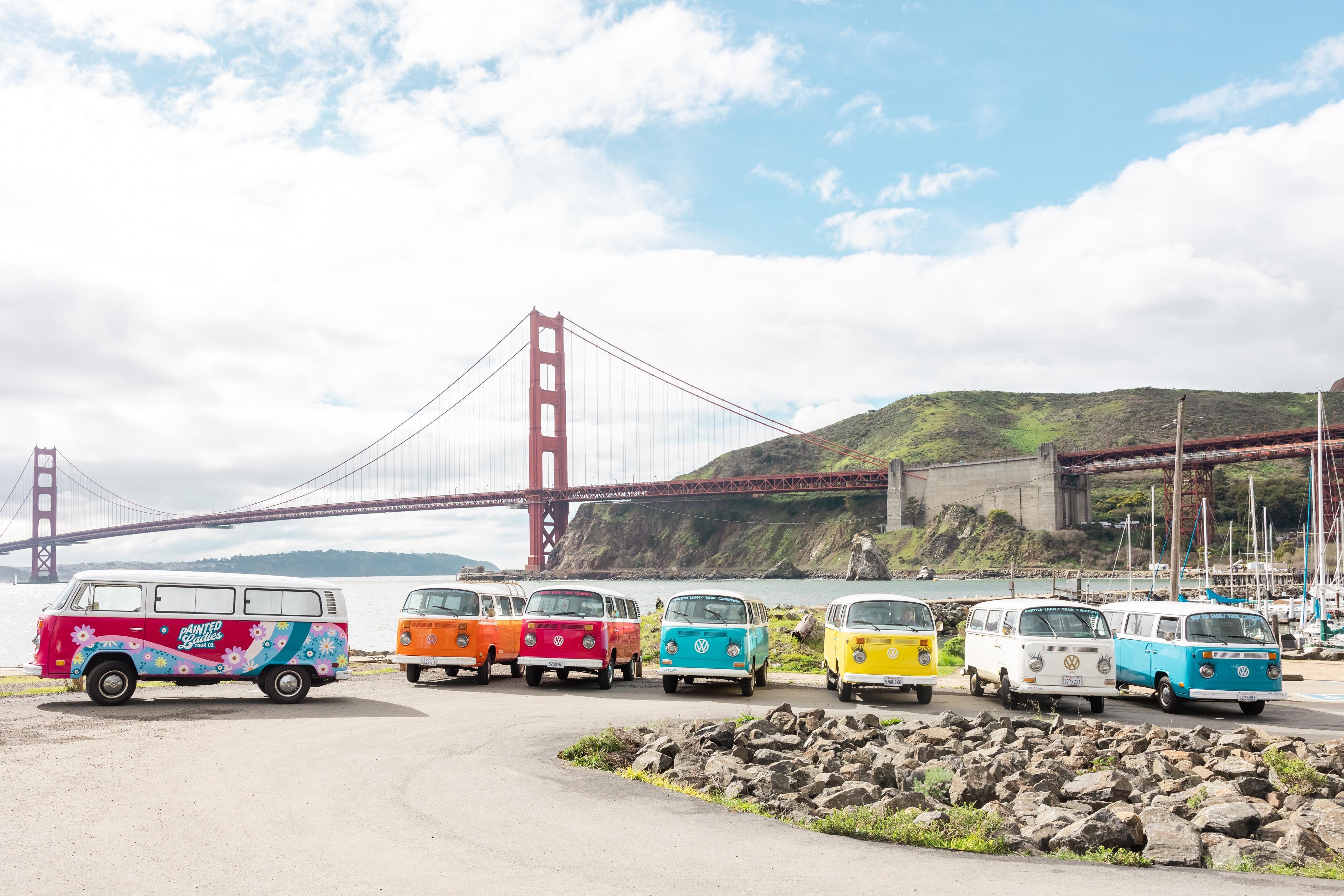
Cruise SF's legendary hills in a classic Volkswagen van with a small group and expert guide
1.5 hours
Free Cancellation
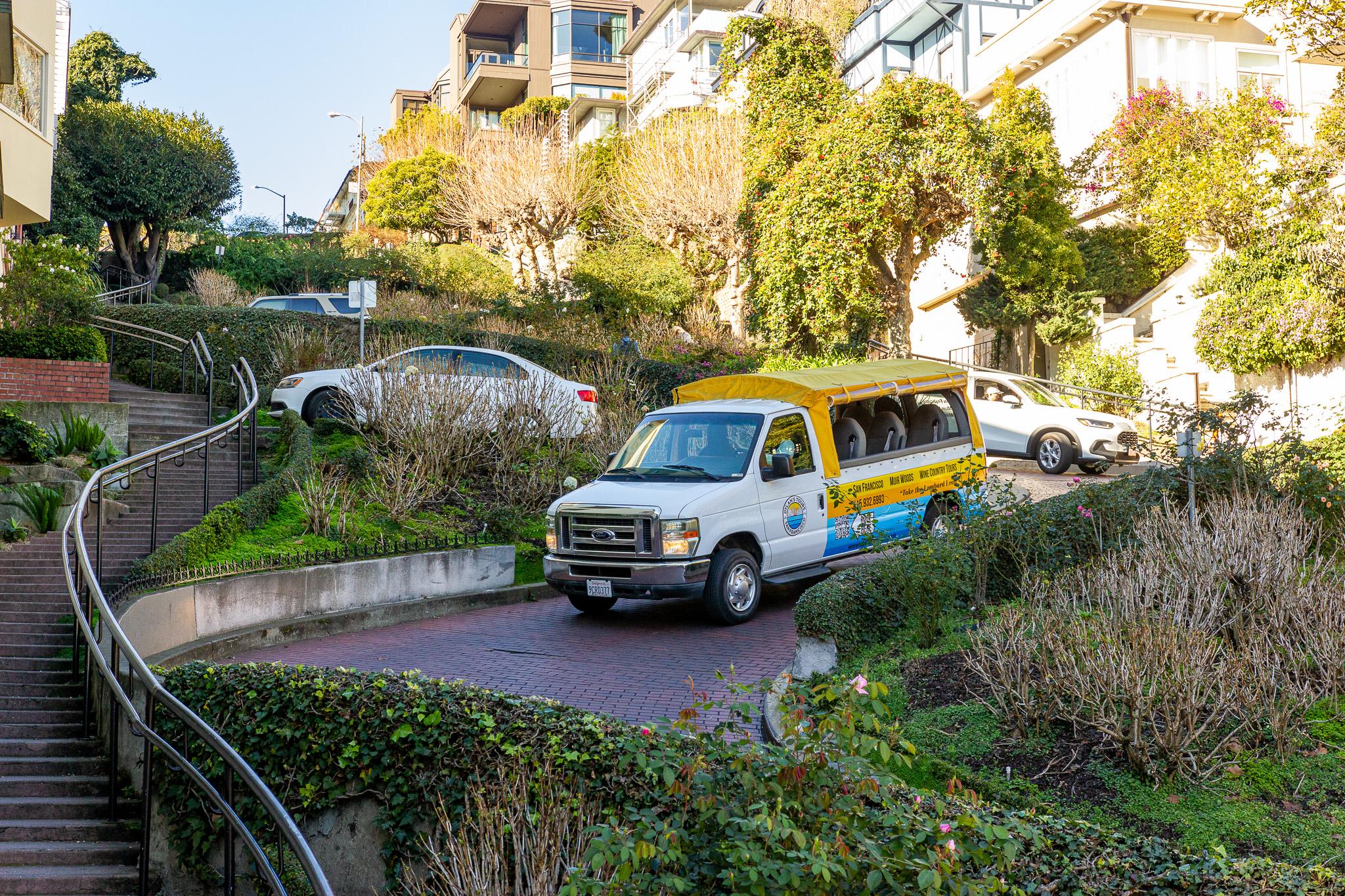
Discover San Francisco's iconic landmarks and neighborhoods in 90 minutes aboard an open-air vehicle
3.5 hours
Free Cancellation
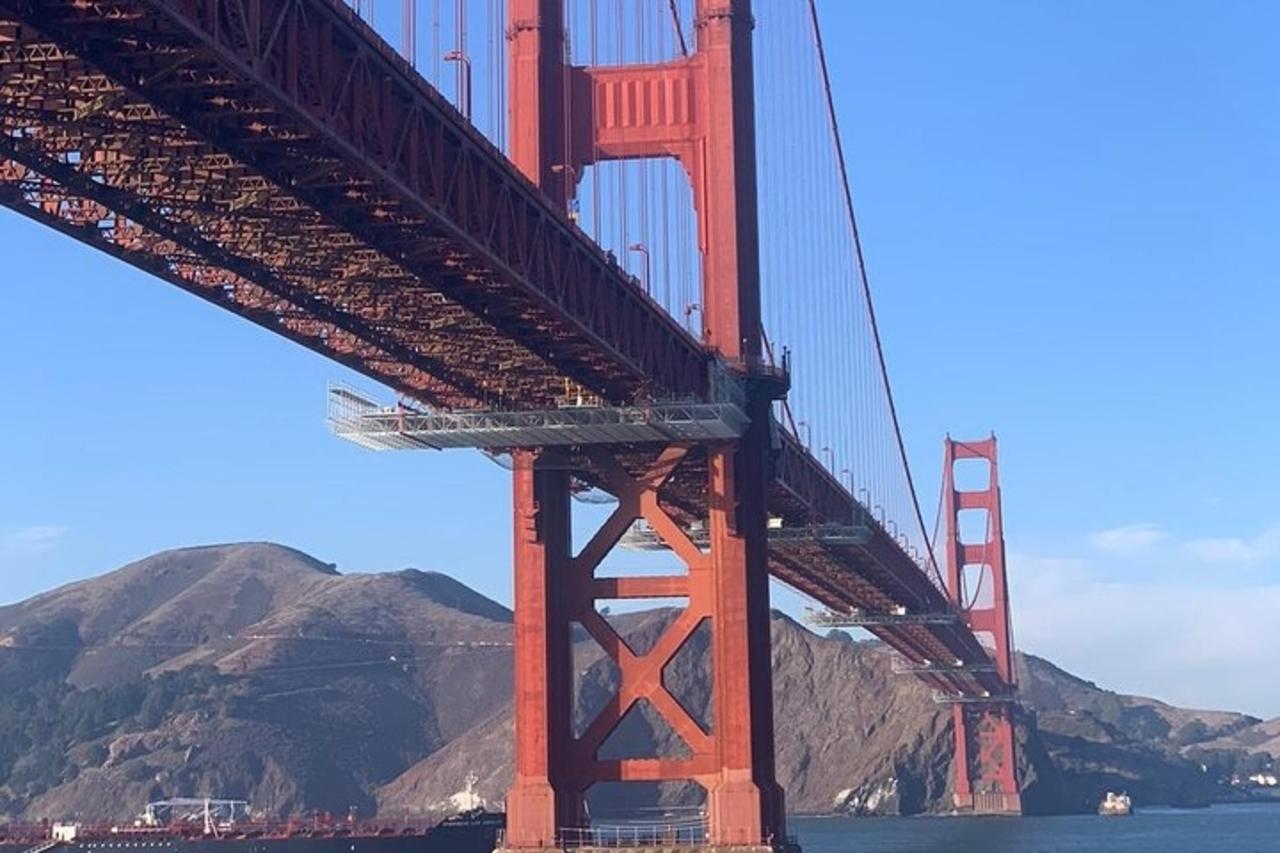
Explore iconic neighborhoods, landmarks, and stunning Bay views on this comprehensive introduction to SF
4 hours 30 minutes
Free Cancellation
Discover SF's hidden lanes, ride a vintage cable car, and explore Chinatown, North Beach, and the waterfront in one epic day.
2 hours
Free Cancellation
Explore iconic landmarks and hidden corners with your own licensed guide on this intimate 2-hour journey.
You enter Chinatown through the Dragon Gate at Grant Avenue and Bush Street, where stone lions guard the threshold and the green-tiled archway frames the incline ahead. The street climbs gently past souvenir shops and tea merchants, their windows stacked with tins of jasmine and iron Buddha.
Your guide steers you left onto Waverly Place, called the Street of Painted Balconies, where red and gold facades rise four stories and the scent of incense spills from open temple doors. You climb narrow stairs to Tin How Temple, remove your shoes at the threshold, and pause before the altar crowded with oranges, candles, and coiled incense spirals hanging from the ceiling. The guide explains the plaques, the goddess, the reasons devotees still come.
Back on the street, you turn onto Ross Alley, so narrow two people pass shoulder to shoulder. A mural covers one brick wall; iron fire escapes ladder the other. The guide points out the doorway where fortune cookies were once made by hand. You emerge onto Stockton Street, where the neighborhood shops for itself: live fish in aerated tanks, bok choy bundled on ice, whole roast ducks hanging in steamed windows. You sample a pork bun, still warm, from a bakery counter. The tour loops through Portsmouth Square, where men huddle over xiangqi boards and children climb a rust-colored play structure. You finish at a dim sum parlor or a teahouse, depending on the walking tour San Francisco Chinatown ticket you chose, the guide explaining what to order and how to pour tea with both hands as a sign of respect.
All the details about your upcoming adventure in one place
San Francisco Chinatown stands as the oldest Chinese enclave in North America, established in the 1850s when Cantonese immigrants arrived during the Gold Rush.
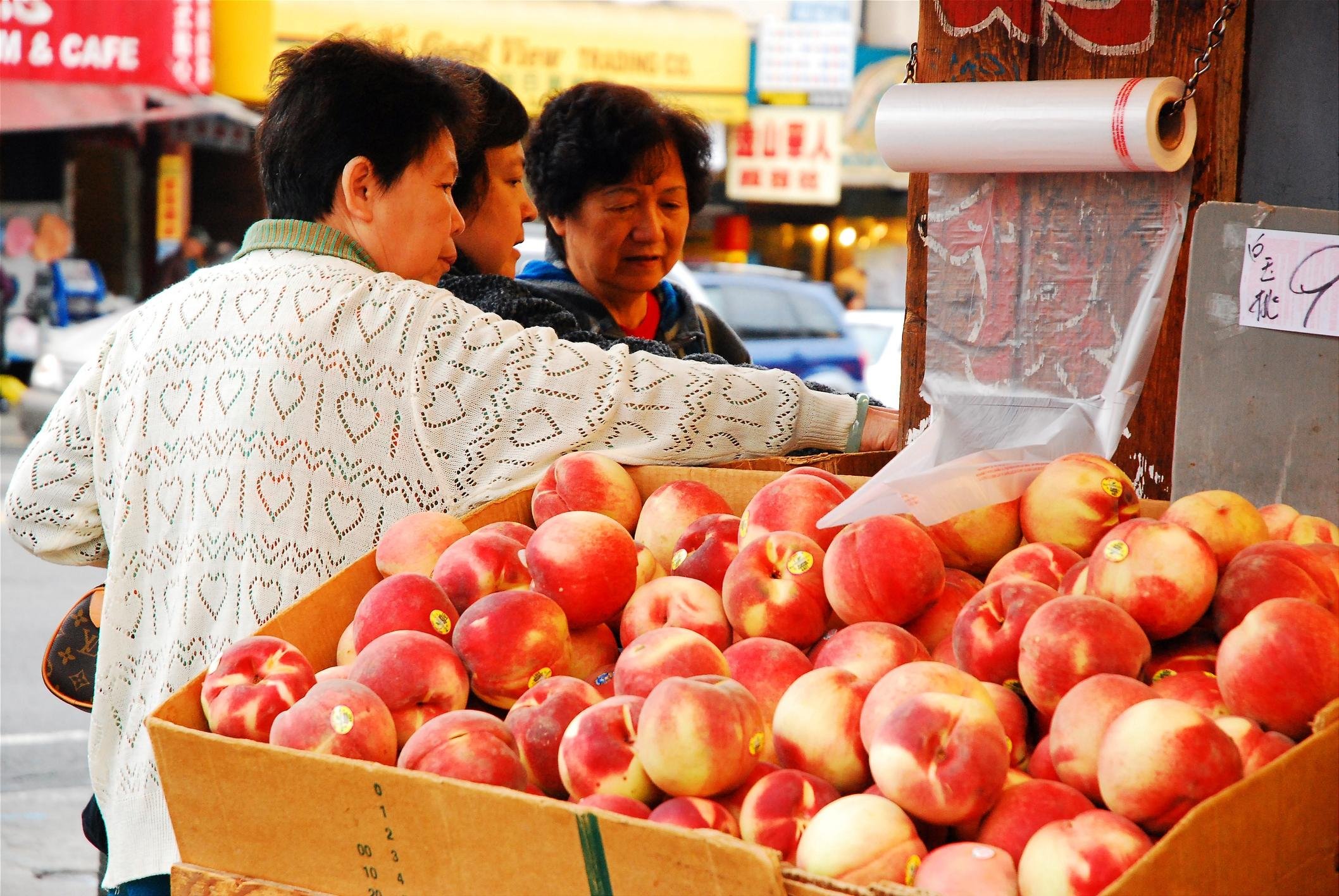
Stretching 24 blocks across Nob Hill's eastern slope, the neighborhood survived the 1906 earthquake and fire, then rebuilt itself in a deliberate architectural style—pagoda roofs, dragon streetlamps, and vermilion balconies—that was as much a political statement as an aesthetic one. Community leaders chose ornamental design to secure the district's future, transforming utilitarian buildings into a landscape that would attract tourists and cement Chinatown's place in the city's geography. Grant Avenue became the commercial spine, while Stockton Street retained its role as the neighborhood's everyday artery, lined with herbalists, butchers, and produce vendors serving residents rather than visitors.
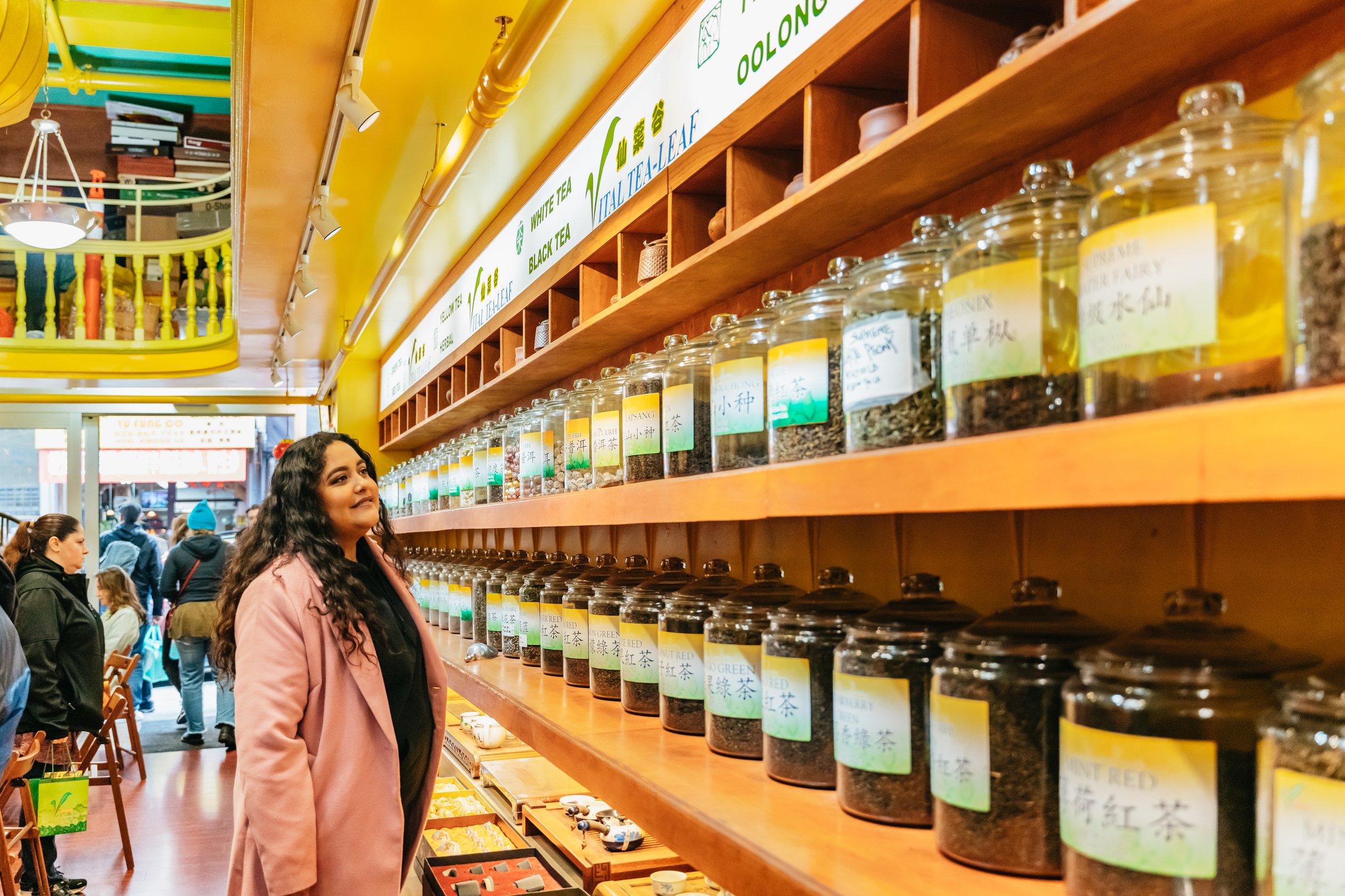
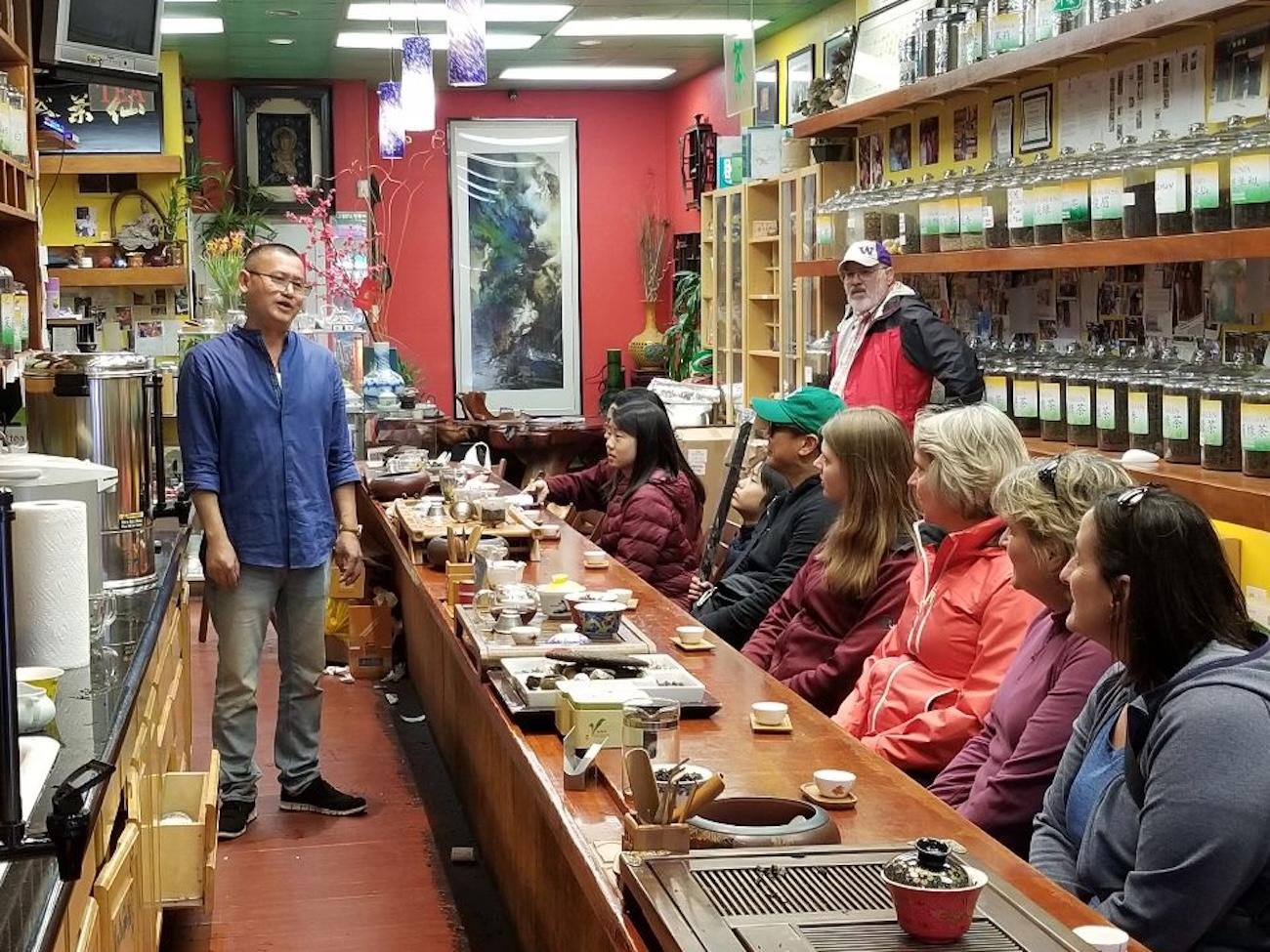
Today, Chinatown remains a working neighborhood where more than 30,000 residents live in one of the most densely populated areas west of Manhattan. Tin How Temple, established in 1852 and relocated to Waverly Place in 1911, still receives devotees who climb three flights to leave oranges and incense at the altar of the sea goddess Mazu. Portsmouth Square, once the city's civic plaza, now hosts daily games of xiangqi and gathered pensioners beneath the pagoda shelter. The neighborhood's culinary identity extends beyond dim sum parlors and roast-duck windows: herbal shops dispense dried seahorse and ginseng root; bakeries sell winter-melon pastries and lotus-seed mooncakes; and tea merchants pour oolong and pu-erh in tasting rooms unchanged since the 1960s.
A walking tour San Francisco Chinatown reveals the layers beneath the painted balconies. Ross Alley, a narrow service lane, housed the last traditional fortune-cookie bakery until recent years, its iron molds pressing batter into curves while tourists watched through a shopfront window. Spofford Alley retains its brick paving and iron fire escapes, a remnant of the post-earthquake rebuilding when the district rose again in wood and masonry. Guides point out the architectural tells—curved eaves that deflect evil spirits, recessed doorways painted red for luck, and the bilingual street signs in English and Traditional Chinese that mark every intersection. The neighborhood's identity is not static; it has absorbed waves of immigrants from Hong Kong, Taiwan, and more recently mainland China, each adding linguistic and culinary threads to the district's fabric. Walking these blocks means navigating a place where heritage tourism and daily life occupy the same sidewalks, where temple incense drifts over produce stalls, and where the past is not preserved in amber but lived in, adapted, and continuously remade.
The neighborhood's identity is not static; it has absorbed waves of immigrants from Hong Kong, Taiwan, and more recently mainland China, each adding linguistic and culinary threads to the district's fabric.
Comfortable walking shoes are essential for navigating the steep hills and uneven sidewalks of this historic district. Dress in layers, as San Francisco's autumn weather can change rapidly.
Keep valuables secure, as the district is bustling with crowds. Backpacks should be kept in front when navigating dense alleyways during your walking tour san francisco chinatown experience.
Photography is generally welcomed, but always respect privacy in residential areas and temple interiors. Look for the colorful lanterns and murals common on a walking tour san francisco chinatown tour.
The area is educational and engaging for children, though strollers may be difficult on crowded sidewalks and stairs. Consider a walking tour san francisco chinatown tour to help navigate the busy streets.
While the neighborhood is a public space, some historic buildings and alleyways have stairs or steep gradients. Visitors requiring specific assistance should book a private walking tour san francisco chinatown tour.
The neighborhood is renowned for its diverse dim sum and bakeries. On a guided walking tour san francisco chinatown tour, you may sample local delicacies, but individual shop rules regarding outside food apply.
Opening hours
00:00–23:59
Address
Grant Avenue and Bush Street, San Francisco, CA 94108
Accessibility
Public streets with varying incline levels
Best arrival window
10:00–16:00
Neighborhood size
24 blocks
Most independent walking tour san francisco chinatown operators offer free cancellation up to 24–48 hours before the scheduled start time. Please verify specific terms for your walking tour san francisco chinatown tickets at the time of booking.
Recommended time
2-3 hours
A walking tour san francisco chinatown provides a comprehensive introduction to the neighborhood landmarks when you explore within the recommended arrival window. Visitors participating in a San Francisco Chinatown tour typically find that mid-morning offers the best balance of active storefronts and manageable sidewalk density. You may consider adding extra time if you intend to browse specific artisan shops or secure walking tour san francisco chinatown tickets for deep-dive heritage walks. Those seeking to purchase walking tour san francisco chinatown tours should aim for the 10:00–16:00 window to ensure all temples and markets are fully operational.
Crowd levels through the day
San Francisco's Chinatown emerged in 1848 when Chinese prospectors arrived for the Gold Rush, settling along Sacramento Street near Portsmouth Square. By 1850 the district held over two thousand residents who built wood-frame tenements, herbal pharmacies, and temples dedicated to Tin Hau. The neighborhood expanded south toward Market Street, becoming the largest Chinese enclave outside Asia. Anti-Chinese sentiment hardened through the 1870s; the Chinese Exclusion Act of 1882 barred new immigration and denied citizenship to existing residents. Chinatown persisted under restricted movement and segregated employment, its population confined by covenant to a narrow corridor. The 1906 earthquake and fire destroyed every building in the quarter. City officials proposed relocating Chinatown to the Presidio or Hunters Point to clear downtown real estate. Merchant and community leaders countered with a reconstruction plan authored by architect Look Tin Eli and backed by the Chinese Six Companies. They commissioned white architect firms to design new buildings in an orientalist revival style—pagoda roofs, dragon motifs, and upturned eaves—calculated to attract tourists and legitimize the neighborhood's place. Reconstruction began in 1907; Grant Avenue reopened in 1909 with brick façades and electric streetlamps. The strategy succeeded: walking tour san francisco chinatown routes formalized by 1910, guiding visitors through curio shops and teahouses along Grant and Stockton. Immigration restrictions lifted partially after World War Two, when China became a wartime ally. The Magnuson Act of 1943 repealed exclusion; families reunited and Chinatown's population doubled by 1950. The neighborhood became a political center during the 1960s, home to labor organizing and advocacy groups that fought urban renewal plans threatening the district. Nonprofit housing projects replaced tenements through the 1970s. Today Chinatown remains a residential and commercial quarter, its pagoda architecture and historic temple sites preserved as part of chinatown san francisco walking tour itineraries. Visitors walk past Waverly Place temples, herbal apothecaries founded before 1920, and murals commemorating exclusion-era labor movements.
Chinese prospectors arrive during the Gold Rush and settle near Portsmouth Square, forming the district's first cluster.
The Chinese Exclusion Act halts immigration and denies citizenship, confining the community under legal segregation.
Earthquake and fire destroy Chinatown; community leaders launch reconstruction with pagoda-style architecture to secure the site.
Grant Avenue reopens with new brick buildings designed to attract tourism and establish guided walking routes.
The Magnuson Act repeals Chinese exclusion, allowing family reunification and doubling the neighborhood population by 1950.
Chinatown becomes a center for labor organizing and advocacy, resisting urban renewal and securing nonprofit housing projects.
Stand at the corner of Grant Avenue and Bush Street to frame the iconic green-tiled pagoda roof and stone pillars against the city streetscape. This is the primary gateway for any walking tour san francisco chinatown.
Capture the narrow, historic street known for its colorful balconies and red lanterns that create a vertical depth of field. It offers a quieter atmosphere than the main thoroughfares for those exploring via walking tour san francisco chinatown tours.
Inside this historic site, focus on the intricate incense coils hanging from the ceiling and the ornate gold altars. Please respect local customs while capturing the interior textures during your walking tour san francisco chinatown tour.
This famous alleyway features the Golden Gate Fortune Cookie Factory exterior and vibrant street murals. It remains a popular stop for those booking walking tour san francisco chinatown tickets to document the local craftsmanship.
Exploring the neighborhood via a walking tour san francisco chinatown allows families to navigate vibrant alleyways at a comfortable pace. It provides an engaging way for children to discover local landmarks while keeping logistics simple.
Sidewalks in this area can be steep and narrow, so a lightweight, collapsible stroller is recommended for navigating these San Francisco landmarks.
Public facilities are limited, so plan to use restrooms at the start of your walking tour san francisco chinatown tour or in larger public buildings.
Many operators offer a family-oriented walking tour san francisco chinatown tickets option that includes interactive scavenger hunts to keep children focused.
The best arrival window is 10:00–16:00, which ensures you avoid peak congestion and allows for a more relaxed visit for younger family members.
Families should review the available walking tour san francisco chinatown tours to confirm specific age recommendations before finalizing their plans.
Exploring the vibrant culinary scene near a walking tour san francisco chinatown provides a perfect break between visiting historic San Francisco landmarks. You will find a variety of authentic dim sum parlors and artisanal tea shops located just steps from the main thoroughfare.
This hidden gem offers a chance to see handmade cookies being folded. It is a quick, essential stop during any San Francisco Chinatown tour.
Everything you need to know for your journey
The neighborhood itself has an entrance fee of 0 USD; however, private walking tour san francisco chinatown tours have independent fees.
The best arrival window for a walking tour san francisco chinatown is 10:00–16:00 to ensure shops and temples are active.
Most walking tour san francisco chinatown tours meet near the Dragon Gate at Grant Avenue and Bush Street.
Many areas are accessible, but steep streets and historic narrow alleyways may challenge those with limited mobility on a walking tour san francisco chinatown.
Yes, you can secure walking tour san francisco chinatown tickets via various official travel platforms.
Yes, many operators provide family-friendly walking tour san francisco chinatown options suitable for all ages.
Bring comfortable walking shoes, layers for the San Francisco climate, and cash for souvenirs during your walking tour san francisco chinatown.
Yes, photography is generally allowed, but please be respectful of religious sites on your walking tour san francisco chinatown.
You can reach the area via the Muni Metro T-Third line to Chinatown-Rose Pak station or by cable car for your walking tour san francisco chinatown.
Check the specific policy for your walking tour san francisco chinatown tickets, as most offer free cancellation if requested 24-48 hours prior.
Join thousands of happy travelers who have discovered this incredible experience
Book Your Experience Now